

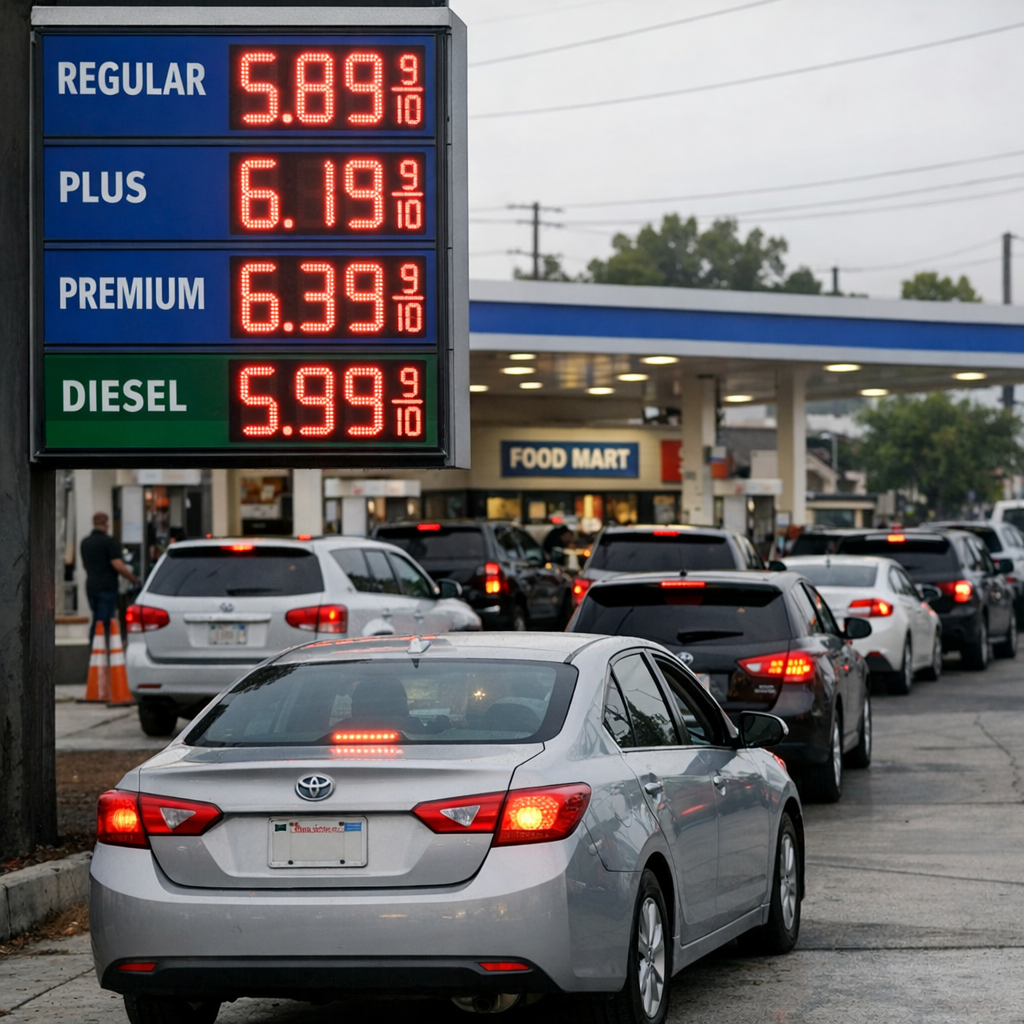
Recent economic developments have placed significant financial pressure on American households and businesses. As of May 2026, consumer prices have risen by 4.2% compared to the previous year, marking the highest inflation rate in three years. This surge is largely attributed to escalating energy costs, particularly due to geopolitical tensions affecting global oil supply routes.
Energy prices alone accounted for over 60% of the inflation in May, with gas prices rising due to Iran’s closure of the Strait of Hormuz. This has led to a national average gas price exceeding $4.50 per gallon, with some states experiencing prices over $5.00. Consequently, many families are adjusting their spending habits, cutting back on non-essential purchases, and seeking more affordable alternatives to manage their budgets.
The economic strain has also influenced public opinion regarding political leadership. A recent YouGov/Economist poll indicates that only 29% of Americans approve of President Donald Trump’s handling of the economy, a record low during his tenure. Additionally, 70% disapprove of his management of the cost-of-living crisis, surpassing disapproval ratings of previous administrations.
In response to these challenges, the Federal Reserve, under new Chair Kevin Warsh, is expected to hold interest rates steady for now but may lean toward future hikes. Businesses have been affected by higher costs and tariffs imposed in 2025, forcing cutbacks and changing consumer behavior. Despite inflation, job growth remains strong, potentially delaying any Fed rate cuts.
As the nation navigates these economic challenges, it is crucial for policymakers and citizens alike to stay informed and proactive in addressing the factors contributing to financial strain. Understanding the interplay between global events, domestic policies, and economic indicators will be essential in developing strategies to mitigate the impact on American households and businesses.