

By Emily Smith
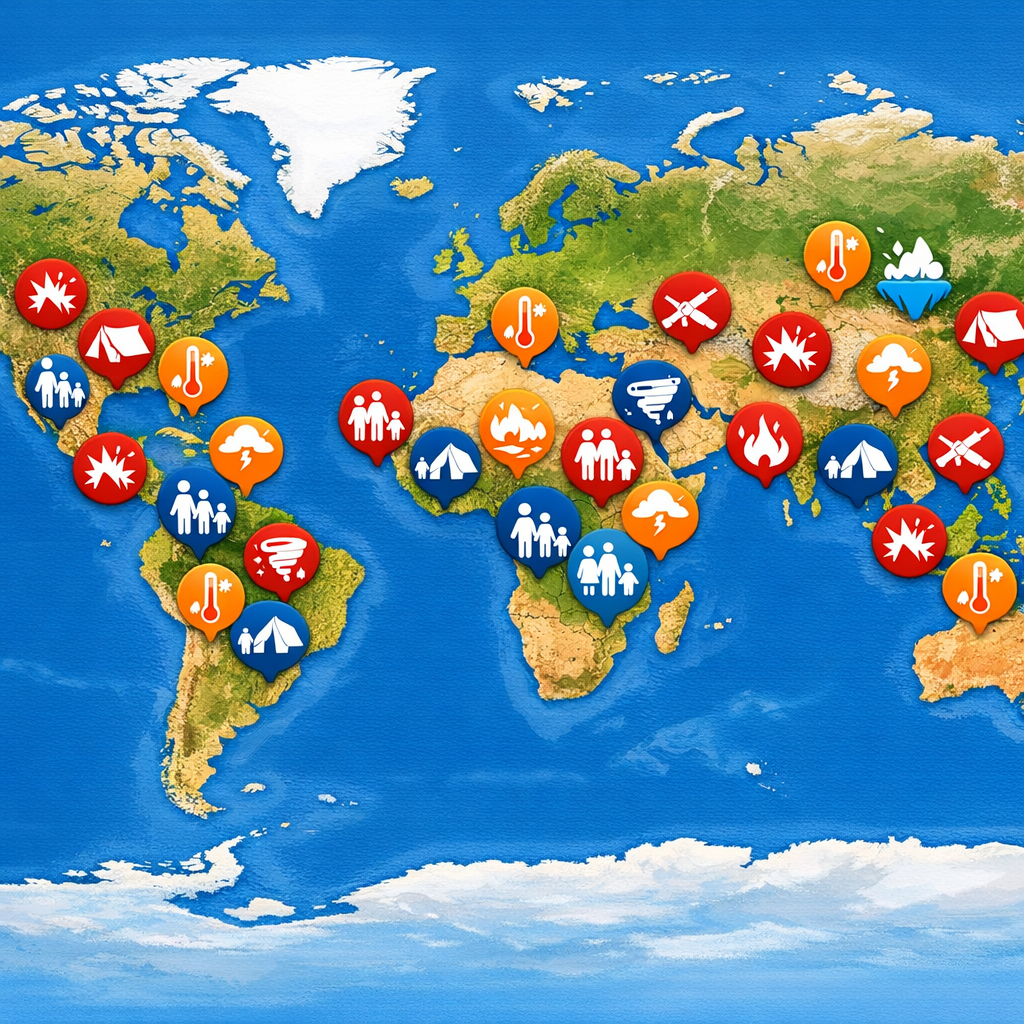
In today’s world, multiple major international crises aren’t just happening side by side—they’re intersecting in ways that amplify their impact. What we’re seeing is a “polycrisis,” where armed conflict, climate instability, economic fragility, mass displacement, and eroding trust in international systems feed into one another. Understanding how these crises are connected is essential for policymakers, communities, and individuals alike.
What is a Polycrisis?
The term refers to a pattern of overlapping challenges—conflicts, public health emergencies, climate disasters, political instability—that aren’t isolated but deeply interwoven. Each crisis intensifies the others, making solutions harder to achieve if addressed separately.
Key Crises Intersecting Around the World
Armed Conflict and Displacement
Wars in places like Ukraine, Gaza, Sudan, and northeastern Africa continue to uproot millions. Already large refugee flows are overwhelming humanitarian systems, leaving many without basic protection and shelter. Increased violence not only causes immediate harm and displacement but cripples infrastructure, disrupts food supplies, and creates long-term obstacles to recovery.
Climate Stress and Environmental Disasters
Climate change is intensifying already difficult conditions, particularly in regions prone to droughts, heatwaves, and floods. Rising global temperatures, erratic weather, and water scarcity worsen health crises, fuel migration, and worsen conflicts over resources.
Economic Pressure and Global Inequality
Global financial stress—high inflation, energy price shocks, and debt burdens—hits poorer nations hardest. Conflict zones lose investment, and shortages of basic goods burst through daily life. As crises persist, economic opportunities shrink and inequality widens, both within and between countries.
Erosion of Global Cooperation and Multilateral Institutions
International institutions designed to coordinate solutions—such as the U.N., WHO, trade pacts—are under strain. Disagreements over climate treaties, the role of scientific bodies, and dispute resolution show cracks in the global framework. Without robust cooperation, cross-border threats—pandemics, supply chains, and environmental damage—grow more dangerous.
Why It Matters for Us in Bellevue and Beyond
Even for communities thousands of miles from conflict zones, these interconnected crises are felt in daily life. Higher gas and food prices, for example, often trace back to disruptions in global supply. Climate disasters abroad can displace people who later seek safety here, further challenging immigration systems. And eroding norms—about international law, human rights—are moral issues for any democratic society.
Steps Toward Resilience
It’s not all bleak. Tackling polycrisis requires holistic thinking and cooperation at every level. Some approaches include:
- Strengthening early warning systems for climate disasters and conflicts so responses can move before crises spiral.
- Reforming multilateral institutions to be more inclusive, agile, and science-driven.
- Investing in economic resilience—especially in infrastructure, clean energy, and debt relief.
- Supporting local governance and civil society, which often operate closest to the threats and can respond creatively.
- Building public awareness of how issues connect: climate, conflict, economics—so voters and citizens demand integrated solutions.
A Call for Collective Response
No single government or group can solve the polycrisis alone. It requires a shift in mindset—to see global stability as a shared responsibility. As citizens, we can follow how policies are made, demand transparency, and support those advocating for systemic change. Only by recognizing that today’s global challenges are linked can we hope to build a safer, more stable and more just world.