
By Matthew Kim
I’ve lived in Bellevue for over 15 years now—so I’ve seen neighborhoods transform, watched spectrums of cost creep into once-quiet corners, and felt both pride and pressure as change rolls in. I write this carrying both love for this place and concern for where we’re headed, because I believe both can co-exist—and because community voices deserve to be part of the map Bellevue’s leadership draws.
What’s Not Changing—and What We Still Cherish
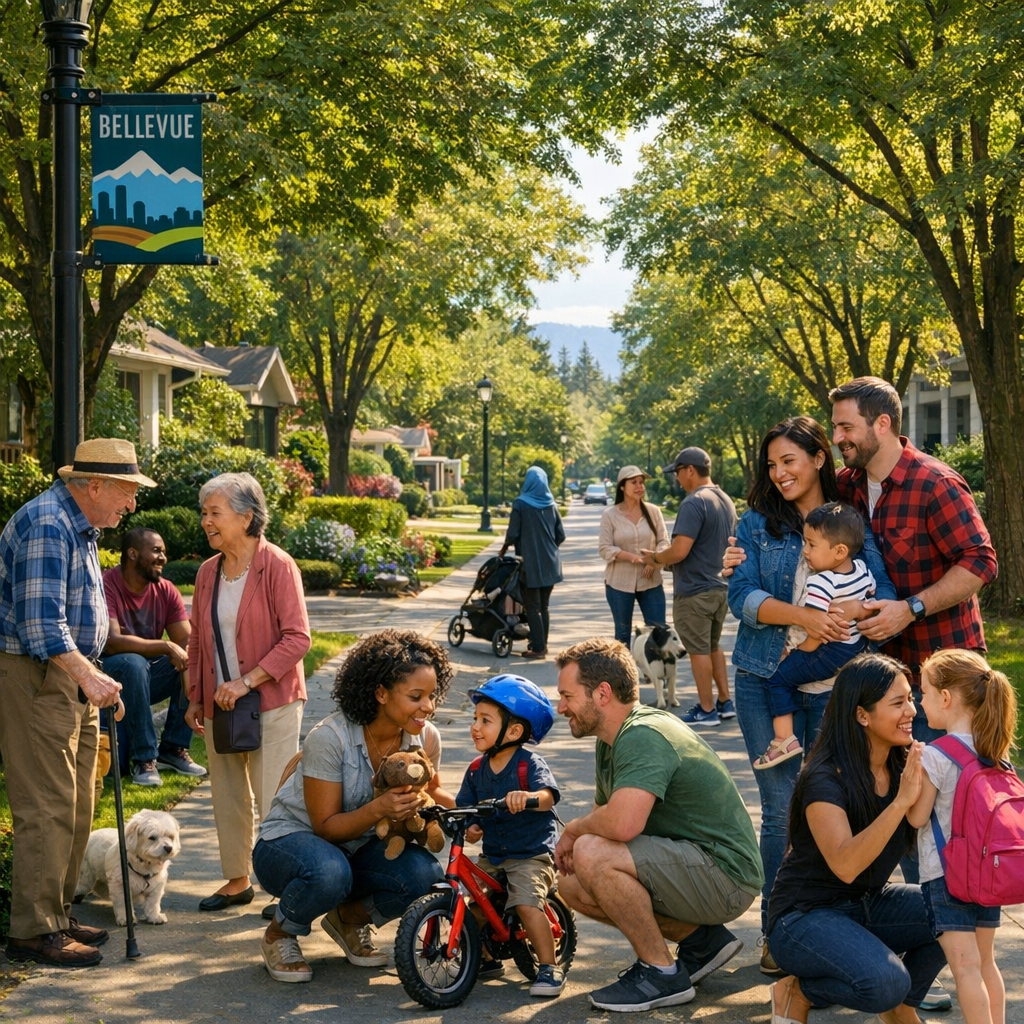
Walkability. Green space. Welcoming faces from many cultures. Among many of us who love Bellevue, these remain in the top category of what makes it special. The Botanical Garden isn’t just a garden—it’s a sanctuary. Rain or shine, families stroll, dog-walkers pass, students pause under trees. And though the skyline changes, these moments grounded here feel like home.
Then there’s public safety. Many new residents have told me the sense of safety keeps them anchored. Streets don’t feel lawless. You can walk after dark in many places and still feel seen, not unseen. Of course, “feeling safe” doesn’t erase the reality of crime, but it shapes daily life—and it counts.
The Burden We’re All Feeling
Cost of living—especially housing and healthcare—has become a shadow over every milestone, whether buying a home, raising kids, or planning for later years. Rent keeps creeping up. Even in good years when our incomes rise, they often move more slowly than rent, property taxes, or even childcare. Many friends are leaving or thinking of leaving—not because they want to but because staying costs too much.
Growth and development have brought opportunity and amenities. But uncontrolled growth also brings traffic snarls, pressure on infrastructure, and a sense that the Bellevue of my memories is fading. The push-pull between density and livability comes up at neighborhood meetings, over kitchen tables, and in casual chats. How dense? How tall? How quickly?
Belonging in a Changing Bellevue
Diversity is real here. Bellevue’s population includes folks born everywhere, speaking dozens of languages, bringing tradition and hope. That’s something many of us identify as a strength. But belonging—it doesn’t always come automatically. It needs intentional spaces, practices, voices at the table. When we talk about community, sometimes that means asking: is someone represented? Is someone heard?
For immigrants, for folks on the margins, for long-time residents worried their neighborhoods are being reshaped without their say, belonging isn’t just symbolic—it’s tied to policy, budget choices, zoning, and public services. And when people feel ignored, trust erodes.
Where Hope and Possibility Live
I see hope in the way people show up: at city council hearings, at budget survey forums, in Cultural Conversations that bring people together. There’s growing appetite for thinking creatively—to build affordability without losing the traits that make Bellevue a place many of us call home. Options like accessory dwelling units, transit-oriented growth, preservation of tree canopy, walkable design—all promise ways forward.
I believe Bellevue can be both competitive and compassionate; both modern and grounded. But that will take difficult choices—and consistent attention to voices often quieted. If we build policies not just for our aspirations but for our actual lives, we can shape growth that feels less like loss and more like belonging.
Because at the end of the day, what we love about Bellevue is worth keeping—in shape, in spirit, in nature, in reach. And the question isn’t whether we want a thriving city—it’s what we want it to look like together.