

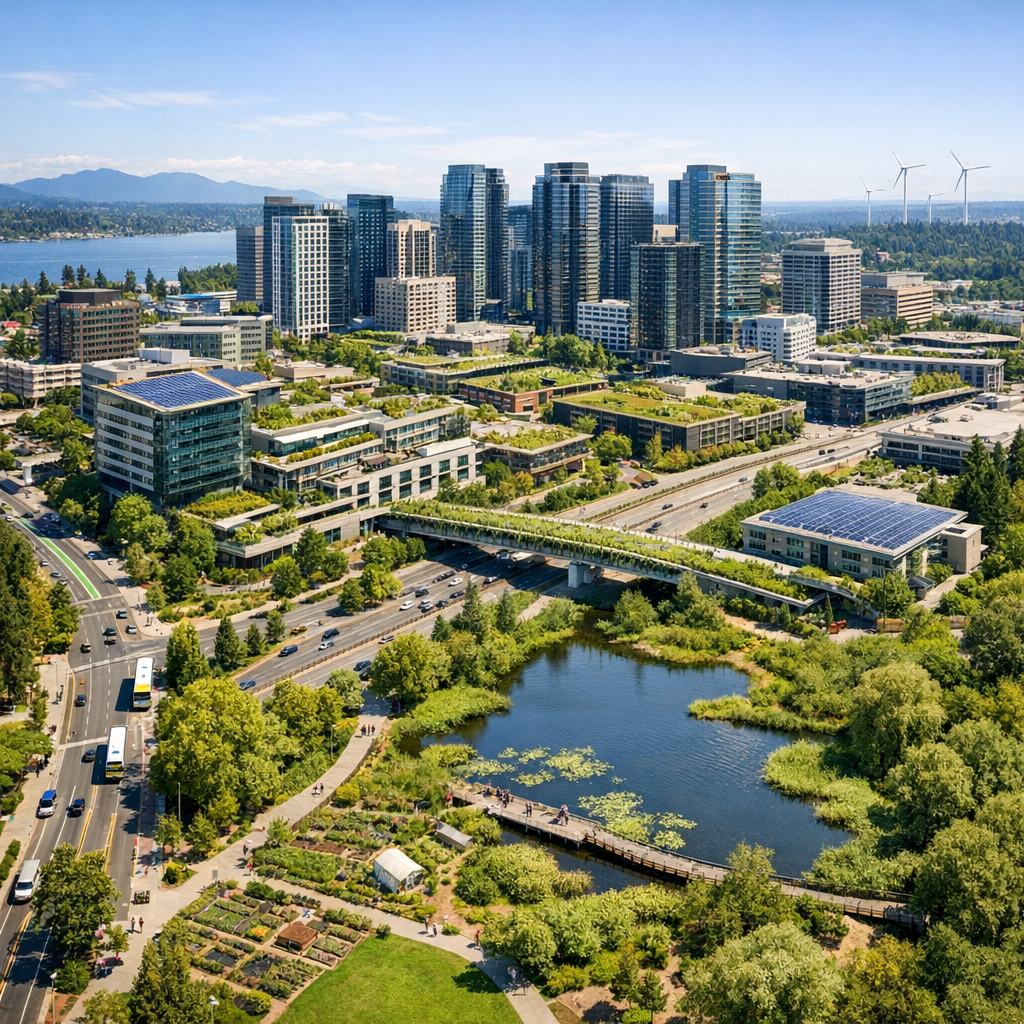
Bellevue has made significant strides in its sustainability efforts, achieving a 4.6% reduction in greenhouse gas emissions from 2023 to 2024. This progress is largely due to decreased energy consumption, reduced reliance on fossil fuel-based transportation, and increased use of clean electricity from Puget Sound Energy. Since 2011, the city has seen a 12% drop in community-wide emissions, even as population and job numbers have grown.
However, the city’s tree canopy experienced a slight decline, decreasing from 39.6% in 2021 to 39.3% in 2023. This loss of approximately 70 acres was primarily in suburban residential areas, though city parks saw an increase of 38 acres in tree cover.
To address these challenges, Bellevue has adopted the 2026–2030 Sustainable Bellevue Plan, aiming for a 95% reduction in greenhouse gas emissions by 2050. The plan focuses on energy efficiency, renewable energy adoption, and urban forestry initiatives to enhance the city’s environmental resilience.
Residents are encouraged to participate in programs like the Bellevue Climate Challenge, which offers resources and support for reducing individual carbon footprints and preparing for climate impacts.